Source Scandinavian Marble Coffee Table for Living Room
Explore 30 listings for the scandinavian marble coffee table, featuring modern designs with metal frames and storage options. Compare specifications from suppliers in China to find the right piece for your living room, bedroom, or dining area needs; compare the available evidence and request quotations based on your requirements.
Key considerations
Products List


Comprehensive Sourcing Guide
Scandinavian Marble Coffee Table Sourcing Guide
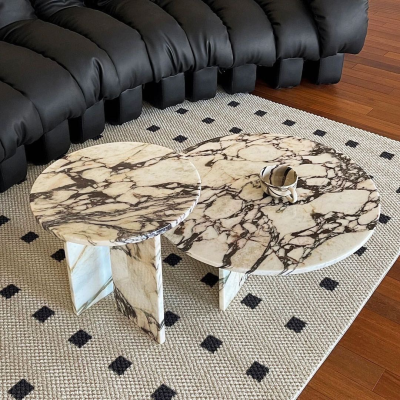
Procuring a Scandinavian-style marble coffee table requires balancing minimalist aesthetics with the inherent weight and fragility of natural stone. Buyers must verify that the "Modern" appearance and "Solid Wood" or "MDF/Plywood" bases observed in listings align with the clean lines typical of Nordic design. The supply chain often features products originating from regions like Chongqing or Hebei, where manufacturers blend traditional stone carving with contemporary furniture engineering.
Sourcing decisions should prioritize suppliers who explicitly offer "Customized" dimensions and "OEM" design acceptance, as standard sizes rarely match the specific spatial constraints of modern living rooms. While some listings indicate a "Single item" selling unit, others suggest bulk orders with an MOQ of 100 pieces, necessitating a clear strategy for initial sampling versus volume procurement. Understanding these variations is critical before engaging with potential vendors to ensure the final product meets both functional and stylistic requirements.
Product Scope and Observed Listing Signals
The market for this furniture category displays a wide variance in material composition, ranging from pure marble tops to combinations involving metal frames and wood bases. Buyers should note that while "Marble" is a primary material, some listings describe "Wood Material" or "MDF/Plywood with HPL," indicating that the term "marble coffee table" may sometimes refer to the visual style rather than the entire construction. This distinction is vital for verifying the actual durability and weight of the unit intended for a living room or apartment setting.
Listing signals also reveal diverse functional applications, with some products marketed specifically for "Living Room" use while others list "Bedroom," "Dining Room," or "Hotel" as valid scenarios. The presence of "Storage" characteristics in certain models suggests a hybrid design approach that deviates from the traditional open-leg Scandinavian aesthetic. Procurement teams must carefully cross-reference the "Specific Use" and "Application Scenarios" fields to ensure the selected item fits the intended interior environment without compromising the desired minimalist look.
Technical Specifications to Verify
Dimensional accuracy is a primary technical concern, as observed listings show sizes ranging from a standard "1" unit to fully "Customized" specifications. Buyers must confirm whether the "Size" attribute refers to a fixed catalog dimension or a bespoke measurement, as the latter often requires a longer lead time and higher minimum order quantity. The "Model Number" field, such as JXT222 or CT011, serves as a critical reference point for verifying that the physical product matches the technical drawing provided by the supplier.
Structural integrity depends heavily on the "Fixed" status and the quality of the joinery between the stone top and the base. While some products feature a "Metal Frame" for added stability, others rely on "Solid Wood" construction which may require specific reinforcement for heavy marble tops. Verification of the "Folded" attribute is also necessary, as most marble tables are "Unfolded" and non-folding, which impacts shipping logistics and the required packaging strength to prevent stone cracking during transit.
Compliance and Safety Documentation
Safety compliance for stone furniture involves verifying that the marble has been treated to prevent dust generation and that the base materials meet fire safety standards for residential use. Although specific certification data like FSC or REACH is listed as low-confidence in the provided context, buyers should explicitly request test reports confirming the structural stability of the "Metal Frame" or "Wood" base under load. This is particularly important for commercial projects like hotels or restaurants where furniture undergoes rigorous daily use.
Documentation regarding the "Warranty" period is essential for mitigating long-term risk, with observed terms ranging from 1 to 2 years. Buyers must clarify what specific defects are covered, such as stone chipping, wood warping, or finish degradation, and whether the warranty applies to the entire unit or just specific components. Ensuring that the "Export Standard Packing" or "Wooden Crate" includes adequate cushioning is also a compliance matter, as improper packaging can lead to damage that voids the manufacturer's warranty upon arrival.
Cost Drivers and Commercial Terms
The final cost of a Scandinavian marble coffee table is heavily influenced by the "Customization" level and the origin of the raw materials. Natural stone prices fluctuate based on the quarry source, while the "Wood Material" cost depends on whether solid timber or engineered wood is used for the base. Buyers should anticipate that "Customized" orders, which often require specific dimensions or finishes, will carry a premium over standard catalog items, even if the base price appears competitive.
Commercial terms vary significantly, with observed Minimum Order Quantities (MOQ) ranging from a single piece to 100 pieces, directly impacting the unit price. Lead times are another critical cost driver, with some suppliers quoting 60-75 days after deposit, which affects inventory planning and cash flow. Understanding the "Port of dispatch" and "Delivery Time" is essential for calculating the total landed cost, as shipping heavy stone items requires specialized freight arrangements that can add substantial expense to the base product price.
Supplier Qualification and Quality Control
Supplier qualification should focus on their ability to handle the specific logistics of heavy stone products, including the "Export Packaging" and "Wooden Crate" requirements observed in the data. A qualified partner must demonstrate experience with "OEM" design acceptance and the ability to maintain consistent quality across "Customized" batches. Buyers should verify the supplier's track record in delivering to specific regions, such as the United States or Europe, to ensure they understand the import regulations and handling requirements for fragile stone furniture.
Quality control protocols must address the unique challenges of marble, such as natural veining variations and potential surface imperfections. Buyers should request pre-shipment inspection reports that verify the "Condition" of the product as "New" and confirm that the "Appearance" matches the agreed-upon "Modern" or "Antique" style. Establishing a clear communication channel for addressing defects before the "Delivery Time" expires is crucial, as returning damaged stone items is often prohibitively expensive and logistically complex.
Long-Term Procurement Checks
Establishing a long-term relationship requires regular audits of the supplier's ability to maintain consistent "Customized" specifications over multiple production runs. Buyers should monitor the "Warranty" claims history to identify recurring issues with the "Metal Frame" or "Wood" base that might indicate a systemic quality problem. Periodic re-verification of the "Material" composition ensures that the supplier has not substituted lower-grade stone or wood to cut costs, which would compromise the product's longevity and aesthetic value.
Future procurement strategies should account for changes in "Lead Time" and "MOQ" requirements as market conditions evolve. Buyers must remain vigilant regarding the "Port of dispatch" and any potential shifts in logistics that could affect delivery schedules. By maintaining a detailed record of "Model Number" performance and customer feedback, procurement teams can refine their specifications for subsequent orders, ensuring that the Scandinavian marble coffee tables continue to meet the evolving demands of the living room and commercial furniture markets.
FAQs
Can I customize the size of a scandinavian marble coffee table?
Yes, customization is available for this furniture type. Buyers can request specific dimensions to fit their living room layout. The product supports custom sizes and modern styling. This flexibility ensures the table meets unique spatial requirements while maintaining the desired aesthetic appeal for home interiors.
What is the typical MOQ for ordering these tables?
The minimum order quantity varies by supplier, ranging from one piece to five hundred pieces. Some vendors list an MOQ of one hundred pieces, while others accept single-item orders. Buyers should verify the specific MOQ with the manufacturer before placing an order to ensure it aligns with their procurement needs.
How long is the delivery time for these coffee tables?
Delivery typically takes sixty to seventy-five days after receiving the deposit. This lead time applies to standard production runs. Buyers should account for this duration when planning inventory. The timeline ensures quality control and proper manufacturing processes are followed before the goods are dispatched from the origin location.
What materials are used in these scandinavian marble coffee tables?
These tables primarily use marble and wood materials. Some models feature a metal frame for added stability. The wood component may include solid wood or MDF with HPL. This combination provides a durable surface and a modern appearance suitable for living rooms, bedrooms, and dining areas in various home settings.
Is there a warranty provided for this furniture?
Yes, a warranty is typically included with the purchase. Coverage periods range from one to two years depending on the supplier. This warranty protects against manufacturing defects. Buyers should confirm the specific warranty terms with the vendor to understand the scope of coverage and the process for making a claim if issues arise.
Where are these coffee tables manufactured?
These items are manufactured in China, with origins in regions like Chongqing and Hebei. The products are exported globally using standard export packaging. Buyers can expect consistent quality from these manufacturing hubs. The location ensures efficient logistics and access to raw materials, supporting the production of high-quality modern furniture pieces.